

Laser light barriers
How does a light barrier actually work?
The basic construction of a light barrier is not particularly complicated. Every light barrier has an optical transmitter that needs to be powered. This transmitter sends a beam of light to a receiver. The moment the light reaches the receiver, current flows. Or, put another way, the receiver becomes conductive. A detector evaluates the signal. But if the phototransistor doesn’t receive any light, then no current can flow. This is how the light barrier detects that an object has entered the beam. This could be, for example, a person or a car.
What does this mean for practice?
If the connection is interrupted, a signal is triggered. In practice, for example, an alarm sound is triggered. Or an automatic door stops because a human or animal has entered a dangerous zone. Light barriers can also be used in industry for particularly precise applications, for example in small parts recognition. Laser diodes are usually used in these areas.
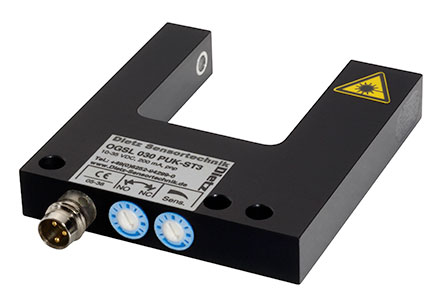
How is the laser beam formed?
Laser diodes are basically specialized, very high quality LEDs. At high currents, they create a coherent, almost ideally monochrome laser light. In ordinary laser diodes, a divergent beam of light emerges from a very small area on two opposite sides. A photo diode in the same housing catches the light on the other side. Laser diodes are extremely sensitive to electrostatic charges or very high currents. Due to its high intensity and luminance, laser light beams are dangerous for the eye. Therefore, all safety regulations must be strictly observed.
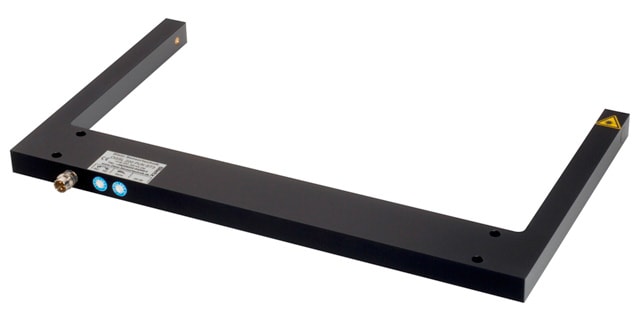
What is the advantage of a laser light barrier?
Compared to other forms of transmitters such as infrared LEDs Laser photocells over a very long range. The bundled light of the laser is much stronger than the ambient light. This allows the construction of a light barrier over a long distance. You can also use light barriers to carry out speed measurements. To do this, two light barriers are set up at a known distance from each other.